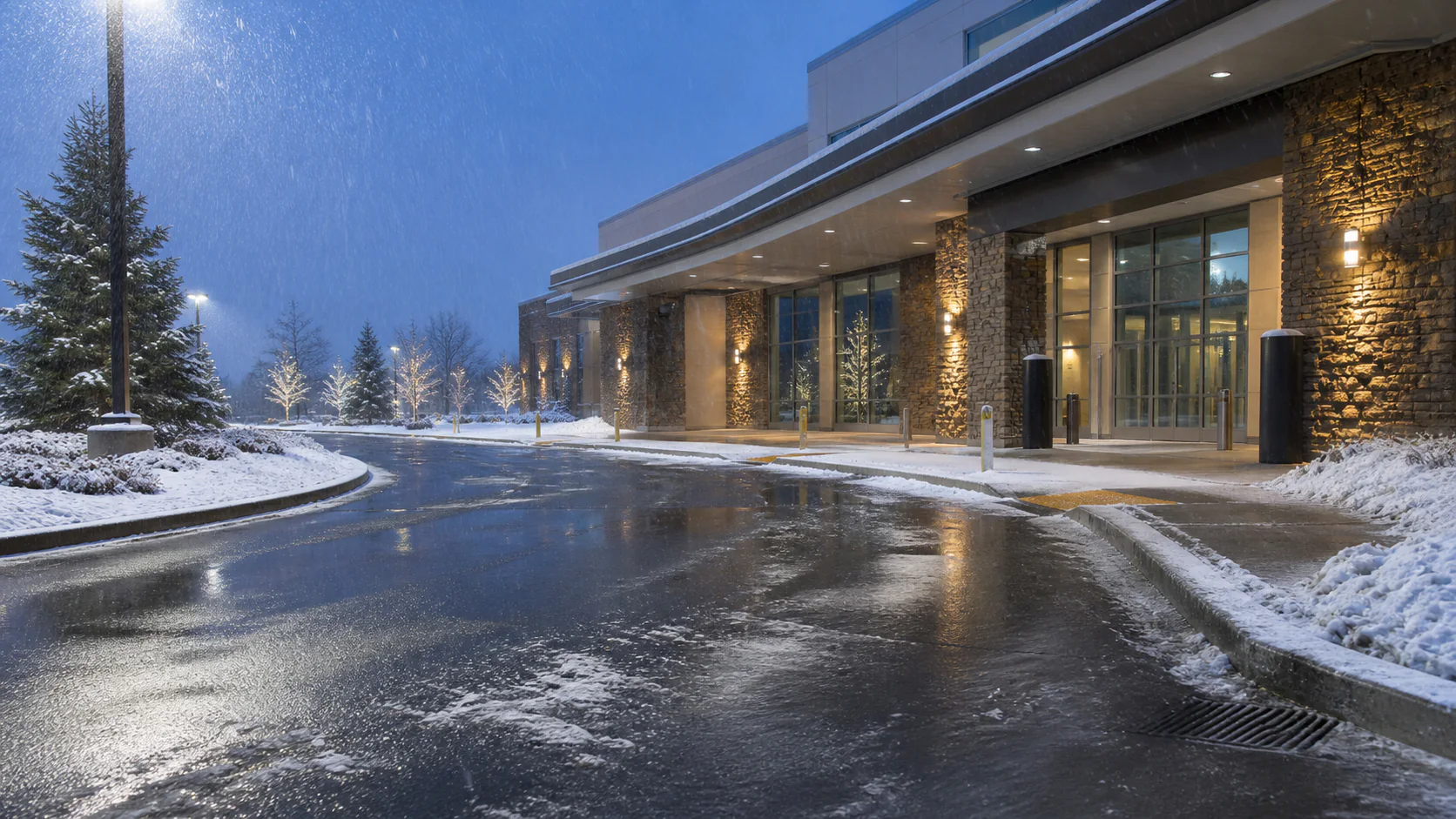
Name the conditions that require attention
Separate freezing rain, compacted snow, meltwater refreeze, roof or downspout discharge, leaking equipment, shaded areas and water tracked through entrances. These conditions can develop at different times and may not be captured by a snowfall total. Identify who monitors forecasts or observed conditions, who inspects the property and who can authorize a response. The plan should describe decision points rather than guarantee a surface outcome. Weather, traffic, drainage and temperature can change after an area has been checked or treated.
Choose repeatable inspection points
Mark entrances, steps, ramps, pedestrian links, loading areas, high-traffic drive aisles, drainage low points and locations with a history of refreeze. Give each point a map code so the same locations appear in instructions and records. Record the relevant operating window and what the observer should note, such as standing water, packed snow, visible ice or an obstruction. WorkSafeBC notes that ice and water can reduce traction and contribute to slips; the responsible workplace must still determine the controls appropriate to its actual hazards.
Trace drainage and refreeze paths
Observe where water begins, where it travels and where it crosses a walking or driving route. Include snowbanks, roof drainage, downspouts, grade transitions, catch basins, shaded areas and traffic that carries water. A treatment response alone may not address a recurring source. Record whether the concern calls for snow relocation, drain access, temporary controls, maintenance review or qualified drainage advice. Avoid diagnosing an unseen site condition from a website form; use the plan to collect facts for an address-specific review.
Align checks with occupancy and weather changes
A single morning observation may not cover a property that experiences daytime melting, evening refreeze or overnight deliveries. Identify periods when people arrive, when doors or loading areas create moisture and when temperatures commonly cross a decision threshold selected by the responsible parties. Ask how continuing precipitation and changing temperatures trigger another observation. The plan should also address weekends and holidays when normal staff are absent. The objective is a clear escalation process, not a claim that every change can be predicted.
Record material and method constraints
Document surface types, vegetation, building-entry concerns, drainage sensitivity, tenant requirements and any approved material restrictions supplied by the property. Ask who selects a treatment, how application is recorded and what follow-up observation is expected. Do not publish a universal salt or treatment prescription: effectiveness and suitability depend on temperature, surface, product, application and property requirements. Environmental, accessibility, worker-safety and maintenance questions should be checked through the responsible authority or qualified professional for the actual site.
Define who decides, acts and communicates
Name the monitoring contact, property decision-maker, service contact and backup contacts. State who can authorize optional work and how a concern reported by a tenant or employee enters the process. If an area is blocked or cannot be addressed, identify who receives the notice and who establishes any interim control. Avoid parallel instructions from multiple people. A written chain makes it easier to respond consistently and creates an understandable record without turning the plan into legal or insurance advice.
Make the event record useful
For each observation or action, record date and time, conditions, location code, finding, action, material where applicable, exception and communication. Photos can add context when collected safely and handled according to the organization's privacy and security rules. Distinguish what was directly observed from what another person reported. If an entry is corrected, preserve the correction history. The record should support operational review, but qualified advice is needed to determine retention, legal significance and insurance requirements.
Close the loop with a recheck and escalation
An action is not the final step if the condition can continue or return. Define when a follow-up observation is expected, who performs it and what result causes escalation. If the source is a recurring drainage, building or surface issue, route it to the appropriate maintenance or design review instead of repeating the same temporary response indefinitely. Review clusters of incidents by map location and time. This turns the plan into a learning process while preserving the boundary that no inspection schedule can guarantee an ice-free property.
WorkSafeBC identifies water, ice, clutter, uneven surfaces and obstructed views as slip or trip hazards. The responsible employer must assess the actual workplace and select appropriate controls; this page does not prescribe a universal treatment or guarantee an ice-free surface.
WorkSafeBC — Slips, Trips & Falls
Sources reviewed September 22, 2026. Confirm current requirements for the exact property and proposed scope.